What Is a Fulfilling Life?
The Masters is this week. I'm not much of a golfer, but I've always loved the tournament. There's something about the first full week of April, the azaleas, the quiet tension of Amen Corner. It draws you in even if you've never picked up a club.
But this year, the tournament has me thinking again about an interview Scottie Scheffler gave last summer. Scheffler is the best golfer in the world right now, and a favorite to win again in Augusta. At 29, he's won four majors, twenty career tournaments, and by any measure is living out the dream he's worked toward his entire life.
And yet, he said plainly that winning is not a fulfilling life.
Not that it isn't fun. Not that he isn't grateful. He described winning the Byron Nelson, his hometown event, shooting an absurd 31 under par, celebrating with his family, and then: "OK, what are we going to eat for dinner? Life goes on." He talked about working his whole life to celebrate for just a few minutes. He talked about not understanding the point, even as he admitted he can't stop chasing the feeling.
I think most people know this feeling, even if they've never won a major championship. You work toward something for years. You get the promotion, close the deal, make the grade. And for a moment, it's genuinely satisfying. Then it fades, faster than you expected, and you're left wondering what comes next.
What struck me most was this: Scheffler isn't burned out or bitter. He loves the work. He loves the competition. But he's honest enough to say that the thing he's best at in the world doesn't touch the deepest places of his heart. For him, that’s his family, his faith, his relationships. The golf is wonderful, but it's not the point.
It's hard to think about Scheffler's reflections without also thinking about Tiger Woods, who this week stepped away from golf to seek treatment following another DUI arrest near his home in Florida. I have no interest in diagnosing or judging Tiger. I don't know what he's going through, and none of us is in a position to say. But watching from a distance, it's hard not to see someone who has achieved more in his sport than almost anyone in history and still seems to be searching for a fulfillment that the winning never quite provided. There but for the grace of God.
Of course, it's easy to nod along with all of this and still feel like it belongs to a world most of us will never inhabit. I'm not a professional golfer. I'll never know what it's like to win a major championship, and I can't pretend to fully understand what drives someone who does. We tend to put elite athletes and celebrities on a pedestal, and that distance can make their reflections feel interesting but abstract.
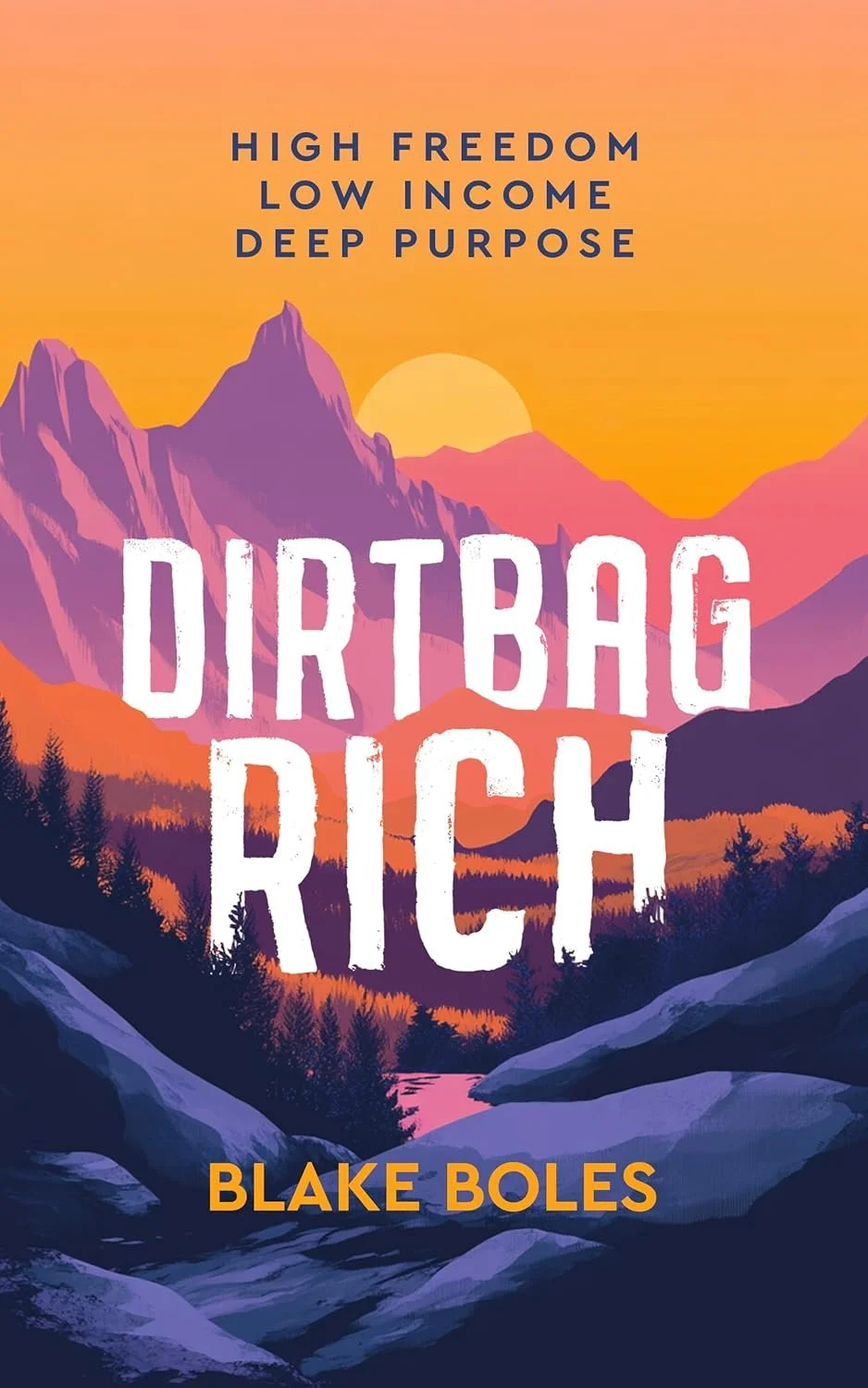
A friend sent me something recently that brought the question back down to earth. Down to the dirt, as it were.
Peter Gray, a psychologist who writes the Substack "Play Makes Us Human," published a piece by a man named Blake Boles about the life he's chosen. Boles is the author of a new book called Dirtbag Rich, and his story could not be more different from the world of professional golf.
Boles doesn't have a house, a car, or a prestigious title. He runs a small travel company for teenagers, gives talks at alternative schools, and writes books about self-directed learning. He works an average of fifteen hours a week, but that’s mostly compressed into a couple of months a year. The rest of his time, he spends reading, hiking, dancing, traveling, and staying close to the people he cares about. The “dirtbag” lifestyle is a counterculture choice, often embraced by outdoor enthusiasts like climbers, skiiers, and surfers who prioritize pursuing their passions over traditional societal norms (career, homeownership, possessions), and rejecting the rat race.
What caught my attention wasn't the specific lifestyle. Most people aren't going to choose the path Boles has chosen, and he'd be the first to say that's fine. What caught me was the framework underneath it. Boles describes being “dirtbag rich” in terms of balancing three things: time, money, and purpose. He wants control over his time and to be flexible. To do that, he needs to earn money, of course. But it’s also about keeping expenses low, deliberately subsisting on a lower income so he can enjoy his free time. Finally, and crucially, he’s seeking deep meaning in both his work and his free time. He doesn't make his purpose wait for the weekend or for retirement.
Gray, the psychologist, put it best in his closing thought: the moral of the story isn't about living inside or outside the box. It's about going through life consciously, making deliberate decisions about how you want to live, and then actually doing it, which takes a great deal of courage. I would add that it's also about how we deal with unmet expectations, setbacks, and inevitable frailties. “Everyone has a plan until they get punched in the mouth,” as the saying goes, but that’s another post.
I think about this often in my work with clients and in my own life. So much of the financial world is oriented around accumulation. How much have you saved? What's your number? When can you retire? These are important questions, and we have to take them seriously. But they're not the first questions. The first question is the one Scheffler is asking and Boles has answered for himself: what’s the point?
I've written before about the "to what end?" question. It came up in a conversation I had on the podcast with my friend Rev. Josh Bascom. So much of modern advice, financial and otherwise, focuses on optimization. Better habits, better systems, better outcomes. But rarely do we pause to ask what we are optimizing for?
The best financial plans I've seen don't start with numbers. They start with a conversation. What do you want your days to look like? Who do you want to spend time with? What would you regret not doing? The numbers matter, but they serve the answers to those questions, not the other way around.
You can watch the Scheffler interview here. You can read the Blake Boles piece on Peter Gray's Substack here. And you can listen to the Josh Bascom episode of Make the Most of Your Money here.