Wherever You Go, There You Are
Over Thanksgiving, our family spent a week in Sicily, where we rented a home with close friends and their four children. It was one of those trips that checks all the obvious boxes: beautiful scenery, unforgettable food, layered history, and the kind of slow evenings and deep conversations that only happen when you’re far from normal routines. It was a week filled with laughter and adventure, but also chaotic mornings, tired kids, and all the familiar dynamics that come with traveling as families who know each other well.
In other words, it was wonderful. And it was real.
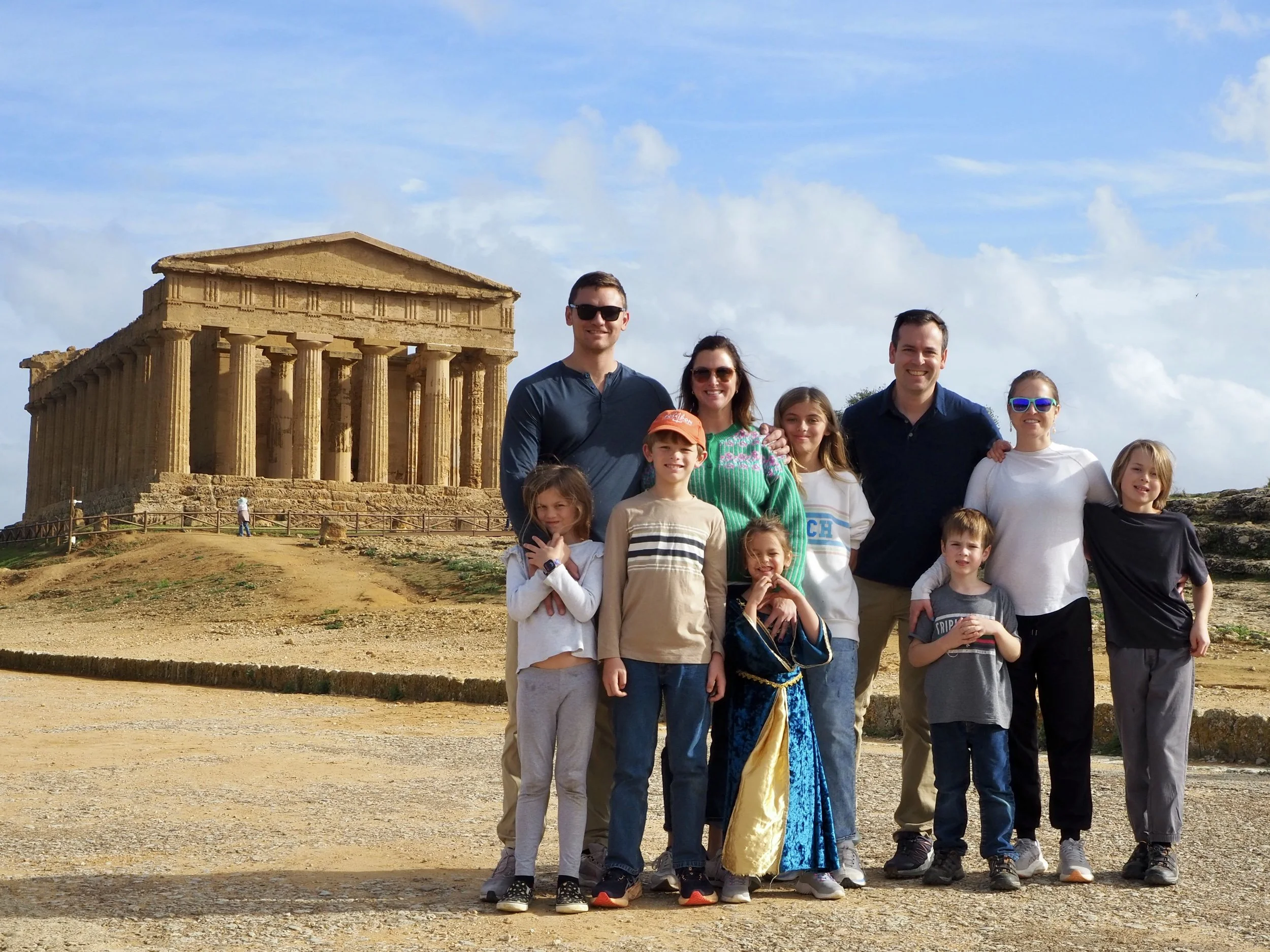
Valley of the Temples, Agrigento, Sicily
At some point during the trip, a familiar phrase kept coming to mind: “Wherever you go, there you are.” The line is often attributed to modern mindfulness culture, but it traces back much further—to Thomas à Kempis, a German-Dutch Catholic canon writing in the 1400s. His point was simple and enduring: changing your surroundings doesn’t automatically change who you are. You carry your inner self—your thoughts, emotions, and unresolved issues—with you, so changing your physical location won't solve internal struggles or the challenges of being in close relationships.
Oddly enough, what really brought this idea into focus for me wasn’t medieval theology, but a modern Jewish thinker from Brooklyn. I’m talking about Adam Sandler’s “Romano Tours” sketch on Saturday Night Live from a few years ago.
Playing a travel guide with a thick New Jersey accent, Sandler deadpans his way through a pitch that undercuts nearly every fantasy we attach to travel. Yes, the scenery is beautiful. Yes, the wine is excellent. But no—this trip will not fix your marriage, your insecurities, your drinking problem, or your general dissatisfaction with life. As Sandler puts it, you’ll simply bring “your same sad self” to a nicer backdrop.
It’s hilarious because it’s true.
We see this same dynamic play out far beyond travel. Think of young adults who leave their hometowns convinced that this move—to New York, Portland, Austin, or wherever—is where they’ll finally “find themselves.” Sometimes the change is healthy. Often it’s necessary. But eventually, reality sets in: the city doesn’t magically erase insecurity, uncertainty, or complicated relationships. The zip code changes; the inner life doesn’t.
That doesn’t mean travel is pointless. Or that change is futile. Sandler and Thomas à Kempis aren’t arguing against new experiences. They’re warning us about expectations.
The real problem isn’t travel—it’s the arrival fallacy: the belief that once we get “there,” things will finally be different. Happier. Easier. Fixed.
What struck me on our trip was how freeing it is to let go of that illusion.
When you stop expecting a vacation to transform you, something paradoxical happens. You become more open to what it actually can offer. Not reinvention, but perspective. Not escape, but presence. Not perfection, but connection.
Our time in Sicily didn’t eliminate well-worn family dynamics. It didn’t smooth every rough edge. But it gave us space—to slow down, to practice flexibility, to laugh at ourselves, and to spend unhurried time with people we love. Those are quieter gifts, but they’re the ones that last.
The deeper wisdom—whether from a 15th-century monk or Jewish comedian—isn’t about cynicism. It’s about honesty. Real growth doesn’t come from a single experience or destination. It comes from sustained, incremental change over time: learning ourselves better, managing expectations, and showing up more fully in the relationships and responsibilities we already have.
Ironically, when we start with more realistic expectations, we often experience the best parts of life more deeply. Travel becomes richer. Family time becomes more meaningful. Friendships deepen—not because they’re perfect, but because they’re real.
Wherever you go, there you are.

Marina di Modica, Sicily