Building Headroom - aging and the brain
I watched my grandmother, who lived across the country from me, decline a little bit more with each visit. My mother, a retired professor and medical researcher at Johns Hopkins, now also has dementia. So when I heard Dr. Tommy Wood discuss his new book on a recent podcast, it hit close to home.
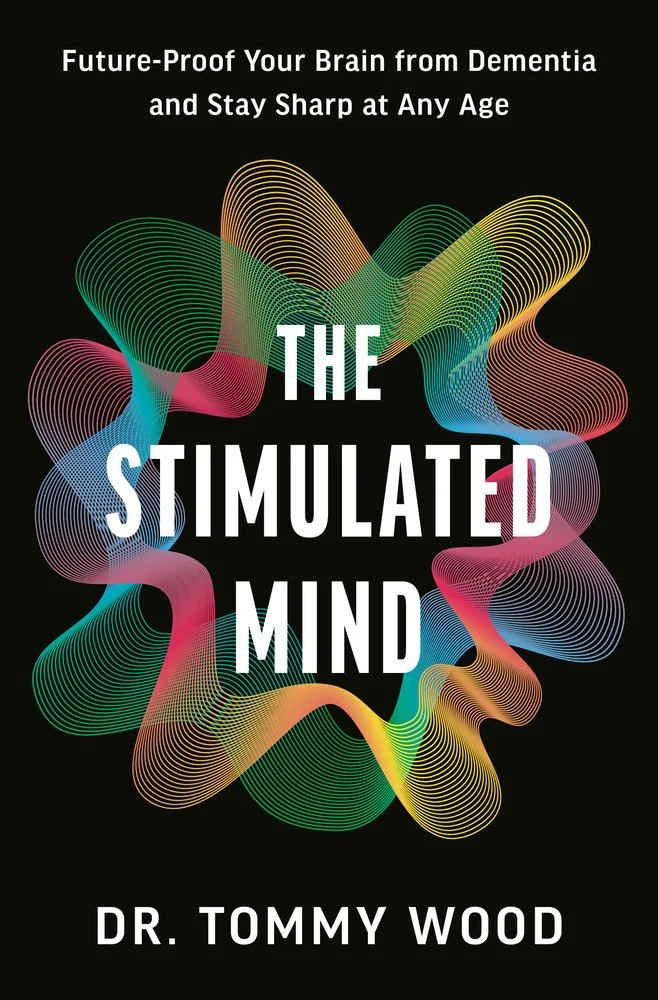
Wood is a neuroscientist, physician, and performance consultant for professional athletes, mainly Formula 1 drivers. He’s also the author of The Stimulated Mind: Future-Proof Your Brain from Dementia and Stay Sharp at Any Age, published in March of this year. In it, he argues that the adult brain is far less fixed, and its decline far less inevitable, than most of us assume.
The brain is tissue, and tissue responds to load
The core thesis is this: just as muscle and bone respond to load, so does the brain. Function follows the stimulus applied, and when stimulus is removed, capacity is reclaimed. The brain isn’t exempt from the rule that governs the rest of the body. Stimulus, coupled with proper nourishment and recovery, produces adaptation. Disuse or mistreatment results in atrophy or injury.
The goal then is to build what Wood calls headroom: the gap between what your day actually demands of you and what you are capable of. Physically, most of us need very little most days. The hardest thing your legs do on an ordinary Tuesday might be standing up from a chair. Your maximum is somewhere far above that, and the distance between the two is what you draw on when you’re sick, injured, exhausted, or in an emergency. Brain health is no different.
His argument is that cognition works the same way, and that the goal isn’t only to slow decline later. It’s to build more capacity now, so there is more to lose before function is actually impaired. This is a plain-language version of something researchers have called cognitive reserve for decades. I suspect it’s what helped my own mother cope with her disease far longer than she would have otherwise. In cases of stroke and traumatic brain injury, healthy parts of the brain can take over the duties of damaged areas.
Genes load the dice
Dementia certainly has a genetic component. The best known is a variant called ApoE4, which meaningfully raises the risk of Alzheimer’s disease. But Wood’s framing is that these genes act as risk multipliers rather than deterministically. Put simply, most people who develop Alzheimer’s don’t carry that gene, and plenty of carriers never develop the disease.
When dementia seems to run in a family, genes are not the only thing being passed down. You tend to eat, sleep, and move the way your parents did. Much of what looks inherited was learned. Family history includes shared environment as well as shared genes.
Most of what we know about reducing dementia risk concerns Alzheimer’s disease and vascular dementia, which together account for the large majority of cases. But these are not the only forms. Lewy body dementia, which my mother has, sits outside that group, and the evidence there is thinner and less consistent.
The erosion starts earlier than we think
Cognitive function tends to peak in our late twenties or early thirties and declines gradually thereafter. We’ve observed this for a long time. Wood’s argument, which he and the neurologist Josh Turknett published as a theoretical model a few years ago, is that a meaningful part of that curve is behavioral, not just biological.
Children learn at a rate that looks like osmosis. But that’s due in large part to their environment and stage of development, which together produce near-constant stimulus. Childhood is relentlessly novel. Everything is new, hard, and slightly humiliating. Then school ends, work begins, and many of us stop being professional learners. The more we know and the more routine our lives become, the less anything surprises us. We get busy, children and work eat into sleep schedules, and for many of us, today looks a whole lot like yesterday.
Neuroplasticity, the brain’s ability to reorganize, change, and adapt its structure and function, does decline with age. But the brain remains far more plastic than most of us assume, and much of what we attribute to aging is really a change in our environment. Life stops being the classroom, and if we want the stimulus, we have to go find it.
How we learn and the benefits of expertise
The basic mechanism by which our brains learn is prediction error. Your brain is a prediction machine, constantly forecasting what should happen next and processing the result. When reality doesn’t match the forecast, that gap is what recruits resources and drives adaptation. Frustration is a signal that you are working in the zone where the brain builds new connections, strengthens pathways, and later prunes the ones it no longer needs.
It’s not just about seeking out novelty. When researchers compare experts with amateurs across things like dance, painting, and complex games, the deeper cognitive benefits follow developing real competence, not just exposure. Whatever your hobbies or interests, Wood’s advice is to pick one or two things to engage with on a deeper level and actually pursue mastery over many years.
My father has spent twenty years learning classical guitar. He has become quite good, but he was far from a natural. He struggled, plateaued, forgot things, and relearned them, constantly returning to and reinforcing the basics. He has stuck with it long enough to watch things that were once difficult become second nature, and to keep finding new and harder ones further along. The deeper you go into something like music, the more you realize how much farther you have to go. That’s kind of the point.
The boring basics, and why willpower isn’t the variable
Wood spends most of his professional life with people at the far end of human performance, including Formula 1 drivers, where milliseconds and millimeters separate success from catastrophe. What struck me is how unglamorous his work with them turns out to be. He distills everything into his “3-S” framework, the pillars of lifelong brain health: Stimulation, Sleep, and Nutrient Supply. Stimulation is how we engage with the world, including physical activity and social connection. Sleep is critical to memory consolidation and metabolic clearance. A healthy diet ensures an adequate supply of energy and nutrients to the brain. That is the whole program.
With the drivers, he says, the stimulus takes care of itself. They’ve been doing the hardest version of their job every day for twenty years, starting on the go-kart track, and they’re already in peak physical condition. So his task is mostly the other side of the ledger: sleep, exercise, recovery, nutrition, getting the boring things done consistently while they live out of a suitcase nine months a year. None of it is about optimization or biohacking. It’s the same short list of things the rest of us already know we should be doing, applied to an unusually demanding life.
Connection deserves a special mention, because it doesn’t come front of mind when we think about health. Conversation is cognitively expensive. You are interpreting another person, holding context, responding in real time, and regulating yourself while doing it. Social isolation is one of the risk factors the 2024 Lancet Commission on dementia identified, alongside things like hearing loss, hypertension, and physical inactivity. Maintaining connection is harder than it sounds, especially in retirement. For most of us, work has been the primary source of daily interaction, and it can go away all at once.
If you’re wondering where to start, in some sense any starting point will do, since these areas compound: sleep better and you’ll have more energy to move; move more and you’ll sleep better. Both will improve cognition. But the research has found that older adults in a structured program with accountability and support improved more than those given the same information and left to run it themselves. Behavior change is challenging, and few manage it on willpower alone. If you’ve tried this before and it didn’t stick, the missing ingredient may have been structure and support, not just resolve.
Influence, not control
Lord knows there is far more outside of our control than within it. The healthiest, sharpest person you know, as my mother was before her diagnosis, may still fall victim to awful diseases. But that’s not to say we don’t have some influence. Better sleep, more movement, tackling harder problems, more time with people you like. These improve your odds and make life so much better now.
The concept of headroom lodged with me partly because it also applies to my work with clients. A financial plan isn’t just about the good years; it’s also about building capacity for when things don’t go as planned. It isn’t about certainty. It’s about tilting the odds. Come to find out that the dividends paid along the way, whether financial or from healthy connections, exercise, diet, and stimulating hobbies, are valuable in their own right.