

In a recent episode of the Make the Most of Your Money podcast, we spoke with insurance specialist Roger Cantu about how to protect your family and finances from the emotional and financial strain of a long-term care event. One solution is a hybrid or asset-based long term care insurance policy, which overcomes some key issues with traditional LTC insurance plans. This type of LTC policy is worth a closer look.

A couple of weeks ago, I wrote about the three tax landmines to watch out for in your retirement plan:
RMDS,
the “widow’s penalty”, and
beneficiary taxes.
If a significant portion of your retirement savings is in traditional IRAs or pre-tax 401k accounts, then you need a strategy to address all three. With proper planning, Roth conversions can neutralize all three tax traps. What follows is a case study to illustrate their utility.

In the delicate act of holding a feather, we are presented with a profound metaphor for life itself. We can clasp it tightly within a closed fist or cradle it gently in the open palm of our hand. Each approach reflects a unique philosophy.
The closed fist represents our instinct to cling to what we cherish, to shield it from the unpredictable wind of change. It's an act of guarding, protecting, and controlling. We often do this out of fear or the desire for certainty and assurance. But, as we clench our fists, we inadvertently obscure the very beauty of what we hold. And what’s more, life rarely conforms to our demands for control.

Cut to the chase: with liability insurance, you should carry as much as you can. Most individuals and families carry liability insurance from two main sources: their home and auto insurance policies. But this may not be enough to fully protect your assets in case of an accident or a lawsuit.
That’s where “umbrella” insurance comes in, to cover you above the liability limits of your home and auto policies. However, you must coordinate coverage with your home and auto policies to make sure that you don’t have a potentially expensive gap in coverage.
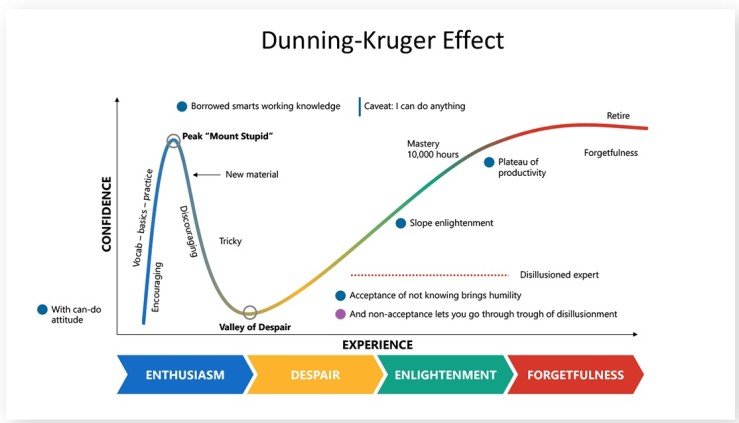
Dunning & Kruger’s study demonstrated something we all know to be true from experience: people with low levels of knowledge, skill, or competence tend to overestimate their own abilities. Their findings have broad implications for personal finance and investing, but it also raises broader questions about the human experience more generally. We are all prone to over confidence. Mastery, in any arena of life, requires that we overcome the despair of failure through dilligence and humility. But is that all there is?

Most of us don’t need any more help perpetuating our arrival fallacies or justifying impulse purchases. Ad agencies, search engines, and Instagram algorithms already have us figured out. Ask my wife, I have no trouble justifying any number of purchases based on how much time they’ll save, what a great investment they are, or how much better off our lives will be once we have ______.
Then there are others whose struggles are in the opposite direction. We all know friends and family members who have plenty of money, but have difficulty spending it, even on things that would really improve their lives, ease some burden, or add a modicum of comfort or enjoyment. “Penny wise, but pound foolish,” as they say..
Whichever camp you fall into, this list of “8 Things You Should Spend your Money On” is for you.

Financial Assessment for a Couple In their Mid-30s
Ever wondered what a financial assessment looks like? Here’s an example assessment of a married couple in their mid-30s with two young children. Mike is an architect working for a larger firm making $95k per year and his wife Mary just received a raise at the consulting firm she works for, and is now making $260k per year after finishing an executive MBA program. They have two children in daycare, but they feel like they should be able to do more with the good money they’re making now, but life just continues to get more complicated.